
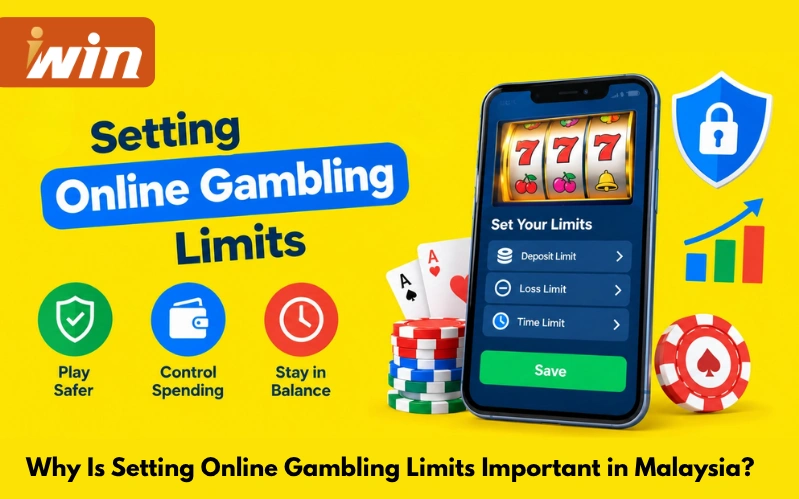
Online gambling can involve financial risks, especially when people spend more money or time than they originally intended. Setting online gambling limits helps establish clear boundaries around spending, playing time, and gambling activity. For people researching responsible gambling in Malaysia, understanding these limits is an important starting point. A budget, time limit, or account restriction cannot guarantee that gambling will remain harmless, but these measures can help people recognize their boundaries and take action before gambling interferes with other parts of life. This guide explains the main types of gambling limits, how to create a personal plan, how limit-setting tools work, and what to do if gambling becomes difficult to control.
What Are Online Gambling Limits?
Online gambling limits are personal boundaries or account settings designed to restrict how much money or time someone spends gambling. Depending on the platform, these tools may include financial limits, session reminders, temporary breaks, and self-exclusion options. Availability and exact operation vary by provider.
The main types of gambling limits include:
- Deposit limits: Restrict how much money you can deposit into an account during a defined period.
- Loss limits: Restrict the amount a person is willing to lose, based on the provider’s calculation method.
- Wager or stake limits: Restrict the amount a person can wager during a specified period or activity.
- Time limits: Set boundaries on how long a person spends gambling.
- Reality checks: Display reminders about time spent playing.
- Cooling-off periods: Temporarily suspend access to gambling services.
- Self-exclusion: Restrict access to gambling for a selected period or under a provider’s exclusion process.
These tools are different from one another. For example, a deposit limit doesn’t necessarily limit the amount wagered, because you may use deposited funds for multiple wagers. Always check the provider’s definition and the period covered by each limit.
Why Is Setting Gambling Limits Important?
Here are the reasons why setting gambling limits is important in Malaysia, given as:
1. Helps Protect Personal Finances
A gambling budget can help separate essential expenses from discretionary spending. Rent, food, utilities, education, savings, debt repayments, and family commitments should not depend on gambling outcomes.
A clearly defined limit can also make it easier to recognize when spending has reached a personal boundary. However, gambling limits do not eliminate financial risk or guarantee losses will stay within a set amount unless the restriction actually enforces it.
2. Encourages Awareness of Playing Time
Online platforms may be accessible for extended periods, making it easy to lose track of time. A time limit or reality-check reminder can prompt someone to pause and assess how long they have been playing.
If gambling repeatedly interferes with sleep, work, education, family responsibilities, or other activities, reducing access or taking a longer break may be more appropriate than simply setting another reminder.
3. Supports Mental and Emotional Wellbeing
Financial losses and prolonged gambling sessions can contribute to stress, frustration, anxiety, and conflict with other people.
Setting boundaries may help people recognize when they need to stop. It is also important to understand that gambling-related harm can occur even when someone has not reached a particular financial limit.
4. Helps Identify Unhealthy Gambling Patterns
Reviewing time and spending can reveal patterns that may otherwise go unnoticed. Examples include increasing deposits after losses, repeatedly extending sessions, or spending money intended for essential expenses.
Recognizing these patterns early gives a person an opportunity to pause, restrict access, and seek support.
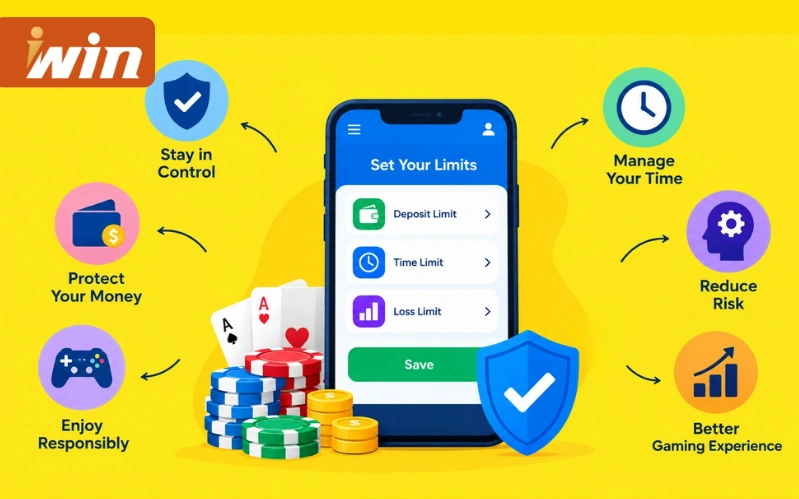
Types of Online Gambling Limits Explained
Online gambling limits have different types depending on the trusted online casinos platform’s availability, but some popular ones are:
1. Gambling Deposit Limits
A deposit limit sets a maximum amount of money that can be added to a gambling account during a specified period, such as a day, week, or month, if the provider supports those options.
How to approach a deposit limit:
- Review your essential expenses and existing financial commitments.
- Decide whether any discretionary gambling spending is appropriate for your circumstances.
- If you choose to set a limit, select an amount you can afford to lose completely.
- Choose a period that is easy to monitor.
- Read the rules explaining when the limit takes effect and resets.
Never use money intended for bills, food, savings, debt repayments, or dependants to fund gambling.
2. Gambling Loss Limits
A loss limit restricts the amount you can lose over a defined period. The exact calculation can differ between platforms, so read the terms carefully.
For example, one provider may calculate losses by comparing stakes with returns, while another may use a different account-level calculation.
Before relying on a loss limit, check:
- Which games or activities it covers.
- Whether winnings or withdrawals affect the calculation.
- When the limit resets.
- What happens when the limit is reached.
- Whether the limit applies across the entire account or only to a specific product.
Do not assume that a loss limit is equivalent to a deposit limit.
3. Gambling Wager or Stake Limits
A wager or stake limit restricts how much can be wagered. This is different from limiting deposits or net losses.
For example, a person may deposit a certain amount and wager those funds several times. A stake limit targets wagering activity rather than the initial deposit amount.
The precise rules depend on the provider’s tool. Check whether the limit applies per wager, per session, or across a longer period.
4. Gambling Time Limits
A time limit helps define when a gambling session should end. It may be set as a personal rule, an account restriction, or a session-control feature.
To make a time boundary practical:
- Decide on the maximum time before starting.
- Use a timer or supported session reminder.
- Stop when the planned session ends.
- Avoid extending the session to recover losses.
- Take a break if you feel frustrated, distressed, or pressured to continue.
If you regularly struggle to stop at the planned time, consider stronger restrictions or support instead of relying on reminders alone.
5. Reality Checks and Session Reminders
A reality check is a notification that reminds a user how long they have been gambling. Depending on the platform, it may appear after a selected interval or display session information.
These reminders can improve awareness, but they may not prevent further gambling. Use them as prompts to stop and review your activity, not as proof that your gambling is under control.
6. Cooling-Off Periods and Self-Exclusion
A cooling-off period is a temporary break from gambling access. Self-exclusion is a stronger measure that restricts access for a selected period or under the provider’s applicable process.
Consider these options if you repeatedly exceed your limits, feel unable to stop, or need a break from gambling.
Before activating a tool, check its duration, start time, coverage, and conditions. Where available, use blocking software or payment restrictions as additional barriers. Do not assume that an exclusion on one platform automatically applies to other services.
How to Set an Online Gambling Budget
A budget should be based on your real financial circumstances—not on expected winnings, bonuses, or the belief that you can recover previous losses.
Step 1: Calculate Essential Expenses
List your regular commitments, including:
- Housing and utilities.
- Food and household necessities.
- Transport and medical expenses.
- Debt repayments.
- Savings and emergency funds.
- Family or dependent-related costs.
These commitments should take priority over discretionary entertainment.
Step 2: Decide Whether Gambling Spending Is Appropriate
After accounting for essential expenses and financial goals, consider whether you have any genuinely disposable money. If you cannot comfortably afford to lose it, don’t use it for gambling. There is no universally safe gambling budget. For some people, the appropriate limit is zero.
Step 3: Choose Clear Financial and Time Boundaries
If you decide to gamble, define your financial boundary and maximum session time in advance. Select account tools that match those boundaries where they are available. Avoid choosing a limit based on a desired win, a promotional offer, or a previous loss.
Step 4: Review Your Activity
Review deposits, withdrawals, spending, and time spent gambling regularly. Look for changes in your behavior, not just the final account balance. If you repeatedly exceed your planned limits or feel compelled to continue, consider stopping and using stronger restrictions.
Step 5: Do Not Increase Limits to Chase Losses
A limit should be a boundary, not a target to work around. Increasing a limit after losing money can deepen financial harm. If you feel pressured to raise a limit, pause before making any change. A cooling-off period or self-exclusion may be more appropriate.
What Should You Do When You Reach a Gambling Limit?
Reaching a limit is a signal to stop, not a reason to find another way to continue.
- Stop gambling when you reach the relevant limit.
- Do not open another account or switch platforms to bypass the restriction.
- Avoid borrowing money or using credit to continue gambling.
- Review your recent spending and time spent playing.
- Consider a longer break if stopping feels difficult.
- Seek help if gambling is affecting your finances, relationships, or mental wellbeing.
Where an account tool is available, understand whether it blocks further deposits, wagering, or access altogether. Different tools provide different levels of restriction.
Warning Signs That Gambling May Be Becoming Harmful
A person does not need to experience every warning sign to benefit from support. Consider seeking help if you notice any of the following:
- Spending more money or time gambling than intended.
- Repeatedly trying to win back previous losses.
- Borrowing money or using essential funds to gamble.
- Hiding gambling activity from family or friends.
- Feeling restless or distressed when trying to stop.
- Neglecting work, education, relationships, or daily responsibilities.
- Continuing to gamble despite financial or emotional consequences.
These signs are reasons to pause and seek support rather than simply creating stricter limits and continuing as usual.
Responsible Gambling in Malaysia: Important Considerations
People in Malaysia should not assume that every online gambling service is legally authorized or appropriate to use. The legal position depends on the activity and applicable law, and a website’s claims or a foreign license do not automatically establish authorization in Malaysia.
Before interacting with any online gambling regulations, consider the applicable legal position, the provider’s identity, and the information it publishes about account controls and privacy.
Responsible gambling also means recognizing when not to gamble. Anyone experiencing financial difficulties, emotional distress, or difficulty controlling gambling should consider avoiding gambling and seeking appropriate support.
For related information, read our responsible gambling guide.
What If Gambling Limits Are Not Enough?
Limits are not a substitute for support when gambling has become difficult to control. If you repeatedly override your own boundaries, experience financial harm, or feel unable to stop, consider taking stronger steps.
- Take a break: Stop gambling and remove yourself from gambling-related notifications and promotions.
- Use access restrictions: Where available, consider self-exclusion and gambling-blocking tools.
- Protect your finances: Avoid borrowing to gamble, and consider asking a trusted person or qualified financial adviser for help with essential financial commitments.
- Talk to someone: Contact a qualified mental-health professional or an appropriate local support service.
- Seek urgent help if needed: If gambling-related distress makes you feel at risk of harming yourself, contact local emergency services or go to the nearest emergency department.
Asking for help is a practical step toward protecting your wellbeing and finances.
Final Thoughts
Setting online gambling limits can help people establish boundaries around money, time, and gambling activity. Deposit limits, loss limits, wager limits, session reminders, cooling-off periods, and self-exclusion each serve a different purpose.
The most important step is to take limits seriously, avoid chasing losses, and recognize when gambling is causing harm. If you repeatedly struggle to stop, do not rely on limits alone—take a break and seek support. Responsible decisions begin with protecting your finances, wellbeing, and everyday responsibilities.
Frequently Asked Questions
What are the most common types of gambling limits?
Common options include deposit limits, loss limits, wager or stake limits, and time limits. Reality checks, cooling-off periods, and self-exclusion can provide additional ways to manage gambling activity.
How do I set online gambling limits?
First, review your finances and decide whether gambling spending is appropriate for your circumstances. If you choose to gamble, define clear financial and time boundaries, use available account tools, and review your activity regularly.
What is the difference between a deposit limit and a loss limit?
A deposit limit restricts how much money you can deposit into an account during a specified period. A loss limit restricts losses according to the provider’s calculation method. The two limits are not interchangeable.
What should I do if I reach my gambling limit?
Stop gambling and do not raise the limit or switch accounts to continue. Review your activity and consider taking a break or using stronger restrictions if you find it difficult to stop.
Can gambling limits prevent gambling addiction?
No. Limits can support awareness and help restrict certain behaviors, but they cannot guarantee that gambling-related harm will be prevented. Anyone who feels unable to control their gambling should consider stopping and seeking appropriate support.
What is a gambling cooling-off period?
A cooling-off period is a temporary break from gambling access, where offered by a provider. Its duration and conditions vary, so check the applicable terms before activating it.
What is gambling self-exclusion?
Self-exclusion is a restriction designed to prevent access to gambling for a selected period or under the provider’s process. Check what services it covers and whether separate exclusions are needed elsewhere.
What are the warning signs of harmful gambling?
Warning signs include chasing losses, spending essential money, hiding gambling, repeatedly exceeding limits, and continuing despite negative consequences. These behaviors are reasons to pause and seek support.
Is online gambling legal in Malaysia?
The legal position depends on the activity and applicable law. Do not assume that an online service is authorized merely because it is accessible or claims to hold a foreign license. Consult current official sources or a qualified legal professional for advice about a specific situation.
Where can I get help if I cannot control my gambling?
Consider contacting a qualified mental-health professional or an appropriate local support service. If gambling is causing financial harm, you may also seek qualified financial guidance. If you are in immediate danger or feel at risk of harming yourself, contact local emergency services.